
Hashimoto's thyroiditis and Graves' disease are both autoimmune conditions involving the thyroid, but they usually push thyroid function in opposite directions. Understanding which condition is present—and what else may be affecting how you feel—is essential to choosing the right treatment.
What Does the Thyroid Do?
The thyroid is a butterfly-shaped gland in the lower front of the neck. It produces thyroid hormones that help regulate energy use, body temperature, heart and muscle function, digestion, and many other processes. When thyroid hormone is too low or too high, symptoms can affect multiple body systems.[1]
What Is Hashimoto’s Thyroiditis?
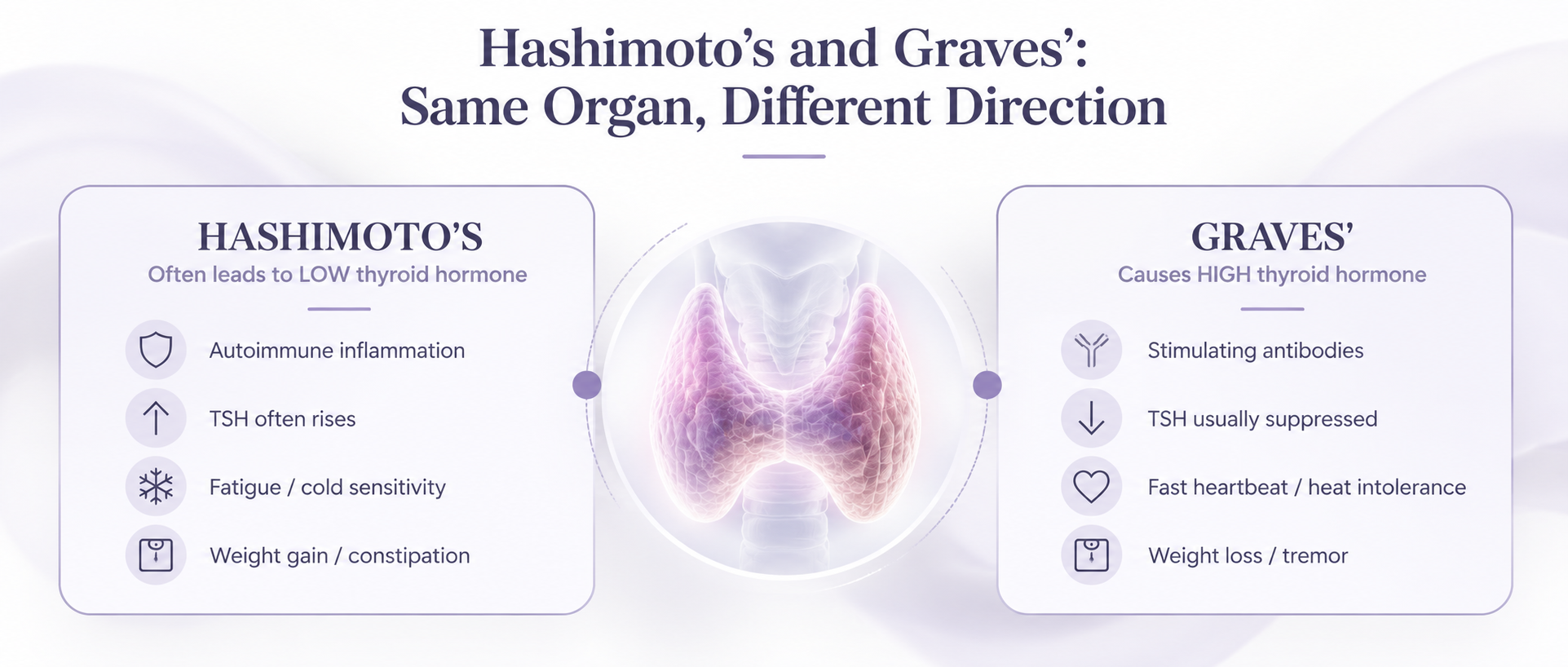
Hashimoto’s thyroiditis is an autoimmune disorder in which the immune system produces antibodies associated with inflammation and gradual damage to the thyroid gland. It is the most common cause of hypothyroidism in the United States. Hashimoto’s often progresses slowly; some people have thyroid antibodies before they develop abnormal thyroid hormone levels or noticeable symptoms.[1]
As thyroid function declines, symptoms of hypothyroidism may include fatigue, increased sensitivity to cold, constipation, dry skin, muscle aches, difficulty exercising, weight gain, depressed mood, heavy or irregular menstrual periods, and sometimes thyroid enlargement (goiter). These symptoms are common to many conditions, so symptoms alone cannot diagnose Hashimoto’s.[1]
What Is Graves’ Disease?
Graves’ disease is also autoimmune, but the antibodies behave differently. Thyrotropin receptor antibodies (TRAb), including thyroid-stimulating immunoglobulins (TSI), stimulate the thyroid and cause it to produce too much thyroid hormone. Graves’ disease is the most common cause of hyperthyroidism in the United States.[2]
Common symptoms can include a racing or irregular heartbeat, tremor, heat intolerance, sweating, trouble sleeping, anxiety or irritability, muscle weakness, and unintentional weight loss. Some people develop Graves’ eye disease, which may cause eye irritation, pressure, bulging, light sensitivity, or double vision. Smoking is associated with more severe thyroid eye disease.[2]
Hashimoto’s vs. Graves’: Why the Difference Matters
Although both conditions begin with immune-system dysfunction, their hormone patterns and treatment needs are different. Hashimoto’s commonly leads to an underactive thyroid; Graves’ causes an overactive thyroid. A patient can also move through changing thyroid states over time, which is one reason repeat laboratory testing and clinical follow-up matter.
How Are Autoimmune Thyroid Conditions Diagnosed?
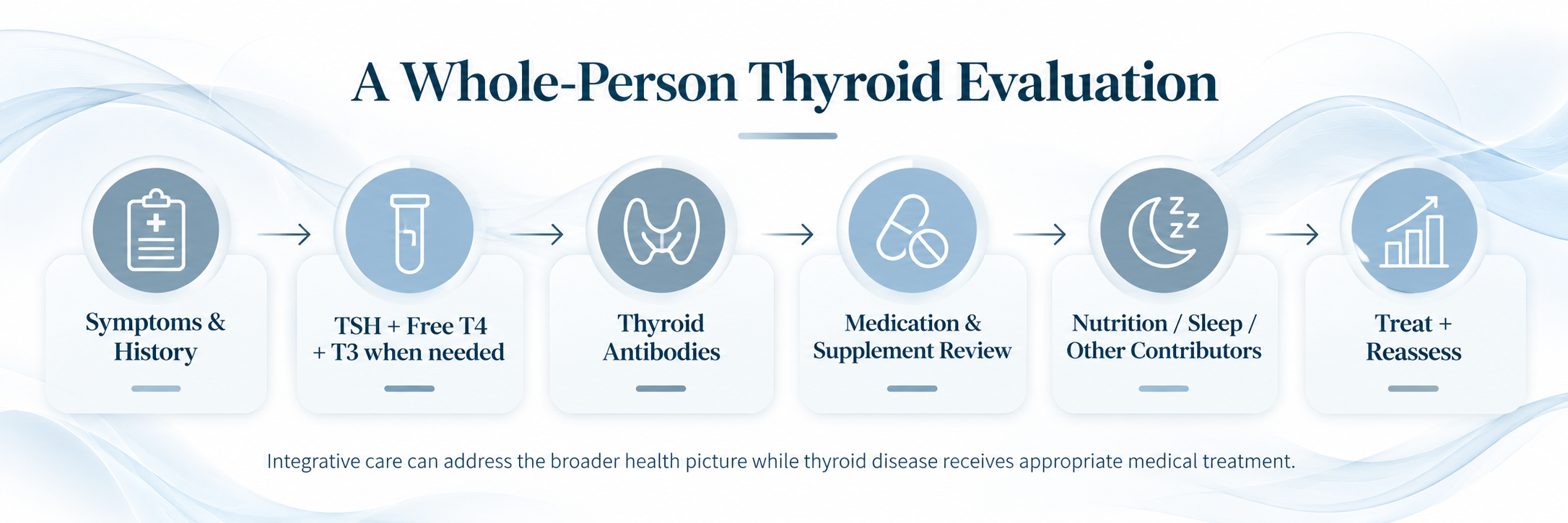
A careful evaluation usually begins with symptoms, medical and family history, physical examination, and thyroid blood tests. For suspected hypothyroidism, TSH and free T4 are central tests. Thyroid peroxidase (TPO) and thyroglobulin (Tg) antibodies can support a diagnosis of Hashimoto’s.[1][3]
For hyperthyroidism, TSH is typically low and free T4 and/or T3 may be elevated. TRAb or TSI antibodies can confirm Graves’ disease in many patients. When the diagnosis remains unclear, a radioactive iodine uptake study or thyroid ultrasound may sometimes be useful.[2][4]
How Are Hashimoto’s and Graves’ Treated?
If Hashimoto’s has caused clinical hypothyroidism, standard treatment is thyroid hormone replacement, most commonly levothyroxine. The dose is individualized and monitored with thyroid function tests. People who have thyroid antibodies but normal thyroid function generally do not need thyroid hormone solely because antibodies are present.[1][3]
Graves’ hyperthyroidism requires a different strategy. Treatment options include antithyroid medication, radioactive iodine, and thyroid surgery. Beta blockers may also be used initially to control symptoms such as rapid heartbeat and tremor. The choice depends on disease severity, eye involvement, pregnancy considerations, thyroid size, patient preference, and other clinical factors.[2]
Where Does a Functional and Integrative Approach Fit?
Thyroid medication or Graves’ treatment may correct the hormone abnormality, yet some patients still do not feel well. That does not automatically mean the thyroid treatment is inadequate. Fatigue, brain fog, weight changes, mood symptoms, hair loss, poor sleep, digestive symptoms, and muscle or joint discomfort can have many overlapping causes.[5]
A functional and integrative approach can complement appropriate thyroid treatment by looking at the broader health picture. This may include nutrition, sleep, stress, gastrointestinal health, medication and supplement use, menstrual or menopausal changes, anemia or nutrient deficiencies when clinically suspected, other autoimmune conditions, and lifestyle factors. The goal is not to replace thyroid treatment or promise to eliminate antibodies. It is to ask whether additional, evidence-supported contributors are affecting the patient’s health and recovery.
A Note About Supplements, Iodine, and ‘Thyroid Support’
More is not always better. Iodine is necessary for thyroid hormone production, but excessive iodine can worsen thyroid dysfunction in susceptible people. Supplements can also interfere with thyroid laboratory testing or medications. Biotin, commonly found in hair and nail products, is a well-known example because it can distort certain thyroid test results. Review supplements with your clinician and avoid starting high-dose iodine, herbal thyroid products, or other therapies simply because they are labeled “natural.” [4]
The Monarch Integrative Health Approach
Patients with autoimmune thyroid disease sometimes arrive with a diagnosis but still have unanswered questions: Why am I still tired? Why is my weight changing? Why do my symptoms fluctuate? Is something else contributing?
At Monarch Integrative Health, the approach is to review the full health history, understand the thyroid diagnosis and treatment already in place, examine medications and supplements, identify relevant patterns, and decide where additional evaluation may be useful. For complex patients, the objective is to connect the thyroid story with the rest of the patient – without assuming that every symptom comes from the thyroid or that every abnormality requires another supplement.
When Should You Seek Prompt Medical Care?
Thyroid disease is usually manageable, but severe hyperthyroidism can become dangerous. Seek urgent medical attention for a very rapid or irregular heartbeat accompanied by chest pain, fainting, severe shortness of breath, marked confusion, high fever, or rapidly worsening symptoms. New vision loss, significant eye pain, or severe swelling around the eyes also deserve prompt evaluation.
A Practical Takeaway
Hashimoto’s thyroiditis and Graves’ disease are autoimmune thyroid disorders, but they are not interchangeable. Accurate diagnosis comes first. Evidence-based thyroid treatment comes next. For patients who continue to feel unwell, a thoughtful whole-person evaluation can then look for additional factors that may be influencing symptoms, resilience, and quality of life. The most useful plan is individualized, measurable, and reassessed over time.
Still experiencing fatigue, brain fog, weight changes or other symptoms despite thyroid treatment? A whole-person evaluation can help determine whether other factors may be contributing to how you feel.
References & Footnotes
[2] American Thyroid Association. Graves’ Disease. Patient information.
[3] American Thyroid Association. Hypothyroidism and Thyroid Hormone Treatment. Patient information.
[4] American Thyroid Association. Hyperthyroidism Awareness: Diagnosis and Treatment Options; Thyroid testing and medication/supplement considerations.

Franca Gardner
ANP-BC, DiHom