
Patient Education • Nutrition • Supplements • Whole-Person Wellness
Supplements can be useful when they fill a nutritional gap or address an individual need – but more is not always better. Food, sleep, movement, stress management, and other healthy habits remain the foundation. The best supplement plan is purposeful, individualized, and reassessed over time.
Start With Food, Then Personalize
Vitamins and minerals are essential to normal body function. They help support processes ranging from bone health and energy metabolism to vision, blood formation, antioxidant defenses, and normal immune function. A varied, nutrient-dense eating pattern is generally the best starting point because foods provide combinations of nutrients and other components that a pill does not fully reproduce.[1]
Supplements can still have an important role. Diet, age, pregnancy, digestive or other health conditions, medications, laboratory findings, limited food intake, or a documented deficiency can change what an individual needs. The question is not whether supplements are universally ‘good’ or ‘bad.’ It is whether a particular supplement has a clear purpose for a particular person.
When Can a Supplement Be Helpful?
There are situations in which supplementation is well established or clinically useful. A clinician may recommend a nutrient to correct or prevent a deficiency, address increased needs during a life stage, or support a specific medical plan. In other cases, a patient’s diet and health history may suggest that a targeted supplement is worth considering.
The important word is targeted. Taking a long list of products ‘just in case’ can add cost, duplicate ingredients, create very high total doses, and make it difficult to know what is helping. In a functional and integrative approach, supplementation should be connected to the patient’s goals, history, diet, medications, symptoms, and – when appropriate – laboratory findings.
Five Nutrients Commonly Discussed in Wellness Care
Vitamin D, vitamin C, zinc, selenium, and vitamin A are often discussed because each plays essential roles in normal physiology. Vitamin D supports bone health and also participates in immune function. Vitamin C is needed for collagen formation and normal immune function. Zinc supports wound healing, immune function, and many cellular processes. Selenium contributes to antioxidant enzymes and thyroid hormone metabolism. Vitamin A is important for vision, growth, immune function, and normal cell differentiation.[2]
Food sources matter. Fatty fish and fortified foods can contribute vitamin D; citrus, peppers, kiwi, strawberries, broccoli, and tomatoes provide vitamin C; seafood, meat, poultry, beans, nuts, and dairy can provide zinc; seafood, meat, eggs, and grains contribute selenium; and leafy greens, orange and yellow vegetables, eggs, dairy, and fish can contribute vitamin A.
These examples are not a blanket recommendation to supplement all five nutrients. Needs differ, and high doses are not automatically more effective.
Why We Do Not Recommend a Blanket Dosing Chart
The appropriate amount of a nutrient can depend on age, diet, health conditions, medications, pregnancy status, laboratory results, and other supplements being taken. Many vitamins and minerals have established upper intake levels because excessive amounts can cause harm.[1]
A dose that is appropriate for someone with a documented deficiency may be unnecessary for someone who already has adequate intake. Some nutrients also accumulate in the body, while others can interfere with absorption or metabolism of medications and other nutrients. This is why a personalized plan is more useful than a universal ‘immune stack’ or wellness dosing chart.
Five Questions to Ask Before Taking a Supplement
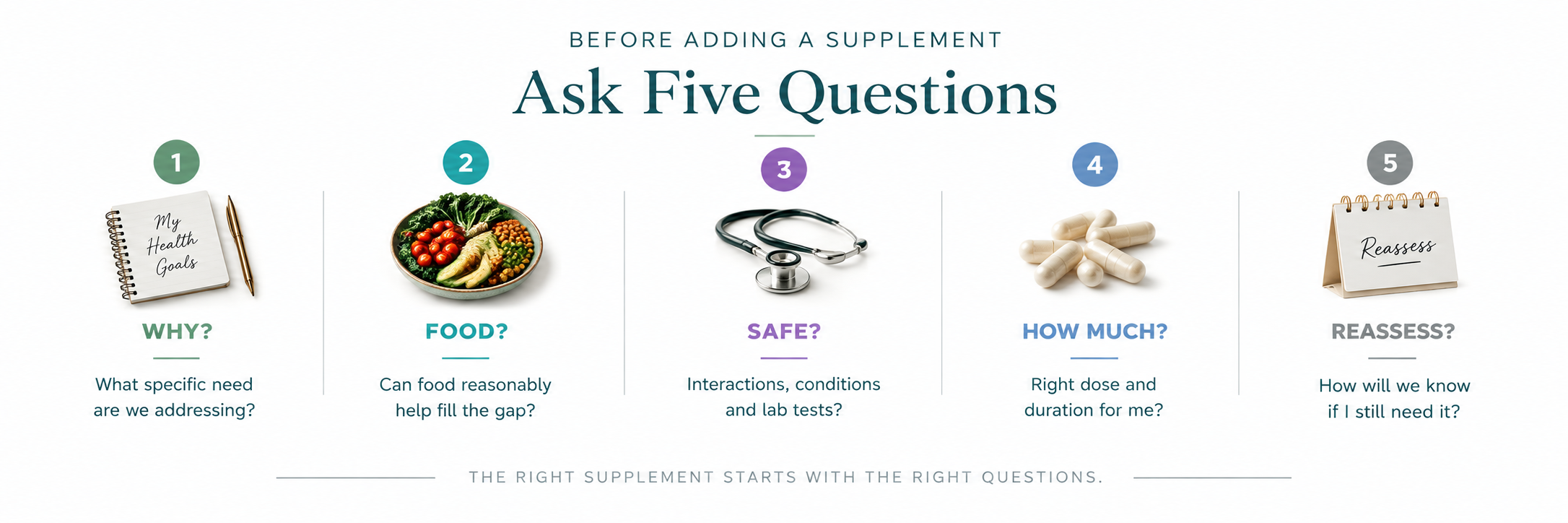
Before adding a product, ask: Why am I taking this, and what specific need am I trying to address? Could I reasonably obtain more of this nutrient through food? Is the supplement appropriate with my medications, health conditions, and other products? What dose and duration make sense? And how will I know whether I still need it?
Those questions shift the conversation from ‘What supplement should everyone take?’ to ‘What is appropriate for me right now?’ They also create a natural point for reassessment rather than allowing a temporary supplement to become a permanent habit without a reason.
Quality Matters – and FDA Regulation Is Different From Drug Approval
Dietary supplements are regulated differently from prescription and over-the-counter drugs. FDA does not approve dietary supplements for safety and effectiveness before most products reach the market. Manufacturers and distributors are responsible for ensuring their products comply with applicable safety, manufacturing, and labeling requirements, and FDA can take action against adulterated or misbranded products after they are marketed.[3][4]
For patients, this makes product selection important. Read the Supplement Facts label, look for clear ingredient amounts, avoid exaggerated disease-treatment claims, and consider reputable manufacturers and credible independent quality testing. Third-party testing can provide useful information about identity or manufacturing quality, but it does not prove that a supplement is effective for a particular medical condition. ‘Natural’ also does not automatically mean safe.[4]
Supplements Can Interact With Medications – and Even Lab Tests
Supplements can interact with prescription medicines, over-the-counter products, and other supplements. Some may be inappropriate with certain health conditions or around surgery. That is why FDA advises consumers to discuss supplement use with a physician, pharmacist, or other healthcare professional.[3]
One easy-to-understand example is biotin, which is commonly found in hair, skin, and nail products. High supplemental intakes can interfere with certain laboratory assays and produce falsely high or falsely low results, including some thyroid-related tests. NIH notes that this interference can contribute to inappropriate patient management or misdiagnosis.[5]
Bring an up-to-date list of vitamins, minerals, herbs, powders, gummies, and other supplements to medical appointments. The list matters even when a product seems harmless.
The Monarch Integrative Health Approach
At Monarch Integrative Health, the goal is not to put every patient on the same supplement list. Franca considers the whole picture – health history, diet, symptoms, medications, goals, prior treatments, and laboratory findings when appropriate – to decide what may be useful, what may be unnecessary, and what deserves reassessment over time.
That approach is especially valuable in complex chronic illness, where patients may already be taking many products recommended by different providers or accumulated over years of trying to feel better. Sometimes the useful decision is to add something. Sometimes it is to change the dose, improve food intake, investigate a possible deficiency, or simplify the regimen.
The goal is a plan that is sustainable, evidence-informed, and tailored to the individual – not the latest trend or the largest number of bottles.

A Practical Takeaway
Supplements can be valuable tools, but they work best when there is a reason for using them. Start with a strong food and lifestyle foundation. Identify the need. Check safety and interactions. Personalize the dose and duration. Then reassess.
If you are taking several supplements, have a chronic health condition, use prescription medications, are pregnant or planning pregnancy, or are preparing for laboratory testing or a procedure, review your supplement list with a qualified healthcare professional. A thoughtful supplement plan should make your care clearer – not more complicated.
Not Sure Which Supplements Are Right for You?
Supplements aren’t one-size-fits-all. At Monarch Integrative Health, we take an individualized approach to reviewing your health history, current medications, and nutritional needs to help you make informed decisions about supplementation.
References & Footnotes

Franca Gardner
ANP-BC, DiHom