
What Is Lyme Disease?
Lyme disease is a bacterial infection caused in the United States primarily by Borrelia burgdorferi. It is transmitted to people through the bite of infected black legged ticks (Ixodes species) and is the most common vector-borne disease in the United States. [1]
Understanding how Lyme disease is transmitted—and recognizing possible symptoms early—can help patients know when further evaluation may be appropriate.
What Are the Early Symptoms?
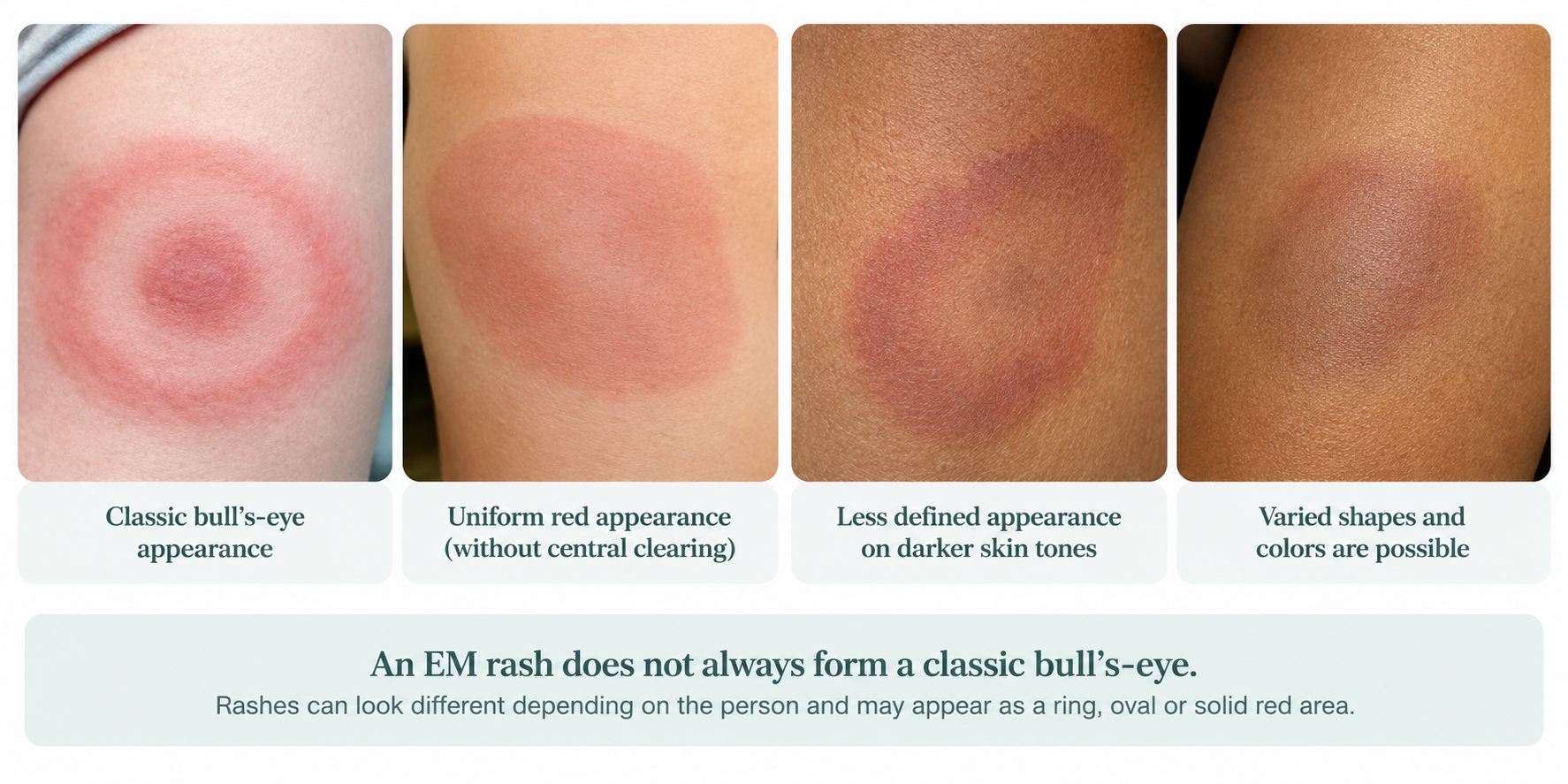
Early symptoms can begin about 3 to 30 days after a tick bite and may include fever, chills, headache, fatigue, muscle and joint aches, and swollen lymph nodes. An expanding erythema migrans (EM) rash occurs in approximately 70–80% of infected people, but it does not always look like the familiar “bull’s-eye.” [2]
Because the rash can vary in shape and color—and because some people never notice a tick bite—Lyme disease should be evaluated in the context of symptoms, possible tick exposure, travel history, and geography rather than one symptom alone.
What Can Happen If Lyme Disease Is Not Treated?
Untreated infection can spread and affect the nervous system, heart, and joints. Later manifestations may include facial palsy, severe headaches or neck stiffness, nerve pain, numbness or tingling, heart palpitations or irregular heartbeat, dizziness or shortness of breath, and arthritis—often involving a large joint such as the knee. [2]
These symptoms overlap with many other conditions. That is one reason a careful history matters: the goal is not to force every symptom into a Lyme diagnosis, but to understand whether the overall pattern and exposure history make Lyme disease—or another condition—a reasonable possibility.
How Is Lyme Disease Diagnosed?
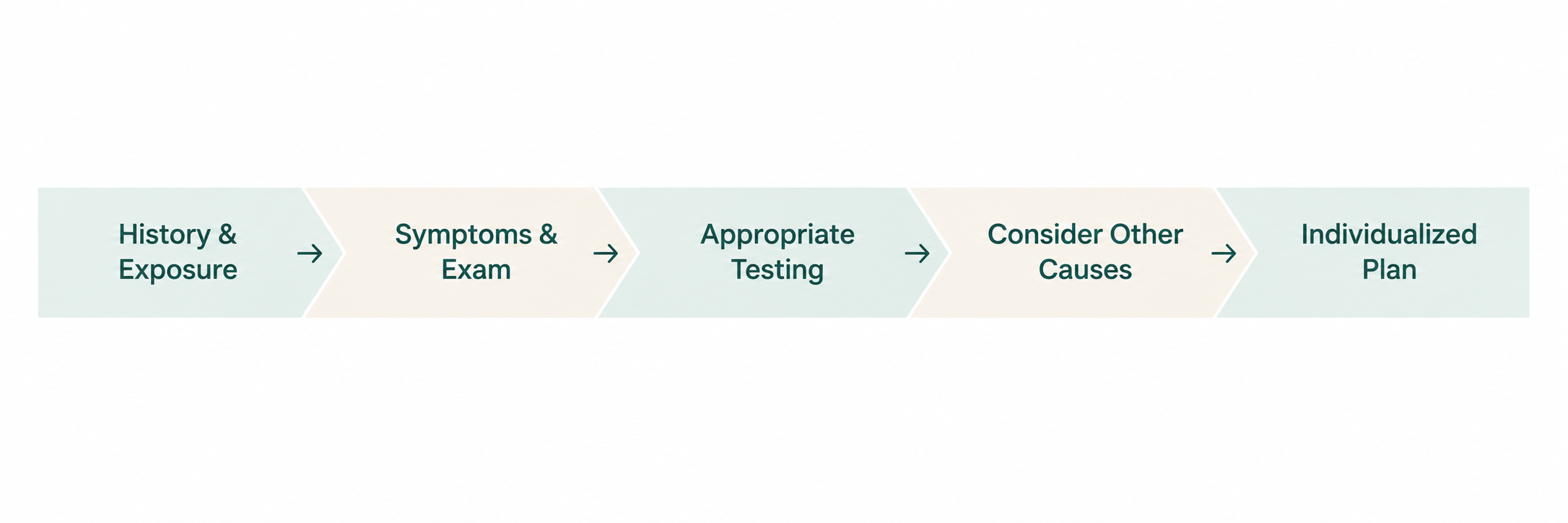
Diagnosis combines clinical judgment with exposure risk, symptoms, consideration of other possible causes, and laboratory testing when appropriate. The CDC recommends FDA-cleared antibody tests using a two-step testing process. Timing matters because antibodies may not yet be detectable during the first several weeks after infection. [3]
A negative test very early in an illness therefore has a different meaning from a negative test obtained later. At the same time, testing should be interpreted carefully: antibodies can remain positive for months or years after an infection has resolved, and false-positive reactions can occur. More testing is not automatically better; the right test, at the right time, for the right clinical question is more useful.
What About Tick-Borne Co-Infections?
Ticks can transmit more than one pathogen, and co-infection may be considered when a patient’s clinical picture suggests it. In North America, Lyme disease can occur alongside other tick-borne infections such as anaplasmosis or babesiosis. These infections have their own diagnostic and treatment considerations. [4]
This is an area where symptoms alone can be misleading. Fever patterns, blood-count abnormalities, travel or exposure history, and other clinical findings may help determine whether additional evaluation is appropriate. Bartonella can cause human illness, but describing it simply as a common Lyme “co-infection” transmitted by the same tick should be avoided unless the specific evidence and exposure support that conclusion.
Is Lyme Disease Hard to Treat?
Most people with Lyme disease improve with recommended antibiotic treatment, particularly when the infection is identified and treated early. The specific antibiotic and duration depend on the patient’s symptoms, age, allergies, pregnancy status, and the manifestation of Lyme disease. Current CDC guidance notes that most cases can be treated with a relatively short course of antibiotics. [5,6]
Some people continue to experience fatigue, body aches, sleep problems, dizziness, or difficulty thinking after recommended treatment. The CDC uses the term Post-Treatment Lyme Disease Syndrome (PTLDS) for prolonged symptoms following treated Lyme disease and notes that the cause is not yet known. Persistent symptoms deserve careful evaluation because Lyme disease is only one of many possible explanations for fatigue, pain, or cognitive complaints.
Where Does an Integrative, Whole-Person Approach Fit?
Integrative care should complement—not replace—appropriate infectious-disease evaluation and evidence-based treatment. For a patient with a complicated or prolonged health story, a whole-person assessment can help organize the bigger picture: prior infections and treatments, sleep, nutrition, medications and supplements, gastrointestinal symptoms, pain, activity tolerance, stress, environmental exposures, and other medical conditions.
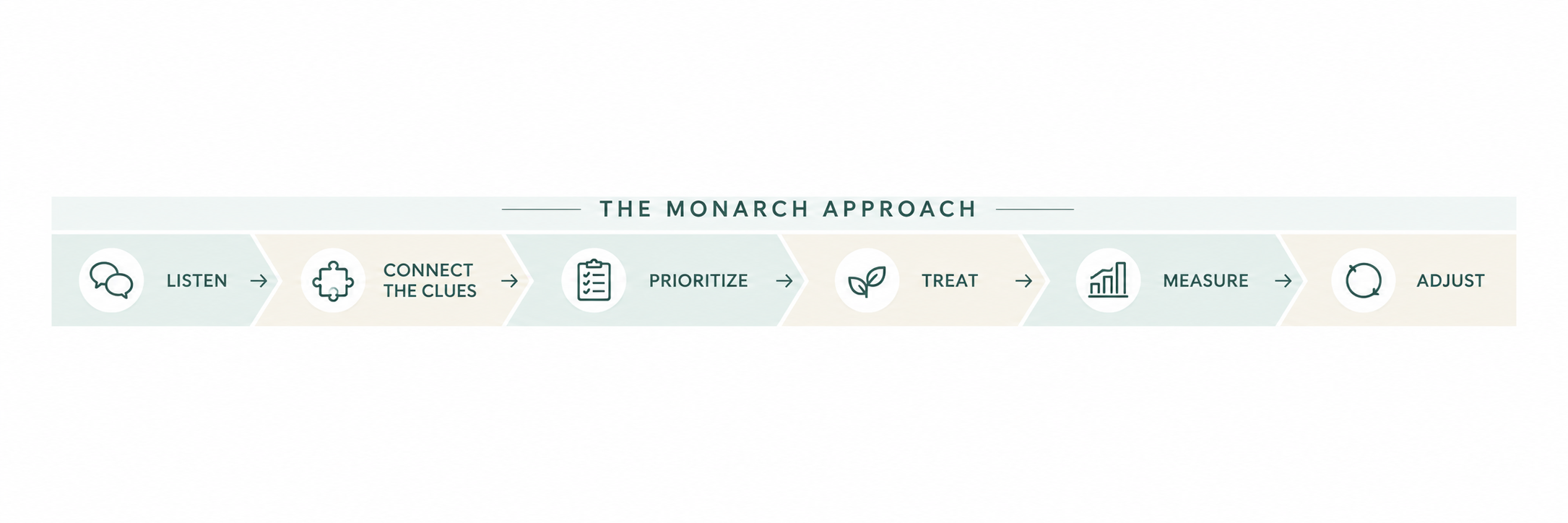
At Monarch Integrative Health, the goal is to listen carefully, connect relevant clues, use testing purposefully, and individualize supportive care. That may include attention to nutrition, sleep, hydration, movement as tolerated, symptom management, medication and supplement review, and coordination or referral when another specialist is needed. The objective is not to assume that every persistent symptom represents ongoing infection; it is to understand what may be contributing to the patient’s current health and build a thoughtful plan from there.
When Should You Seek Medical Care?
Contact a healthcare professional if you develop an expanding rash, fever, facial weakness, new neurologic symptoms, significant joint swelling, or other concerning symptoms after a known or possible tick exposure. Seek urgent medical care for severe shortness of breath, fainting, chest pain, a significant heart-rhythm concern, or severe neurologic symptoms.
A Practical Takeaway
Lyme disease can be straightforward when recognized early, but it can also become a complicated health story—especially when the tick bite was never noticed, symptoms overlap with other conditions, or symptoms continue after treatment. Good care requires both evidence and context: understanding exposure, recognizing the clinical pattern, testing appropriately, treating confirmed disease, and continuing to evaluate the whole patient when recovery is not proceeding as expected.
References & Footnotes
1. Centers for Disease Control and Prevention (CDC). Lyme Disease: overview and clinical resources.
2. CDC. Signs and Symptoms of Untreated Lyme Disease. Updated May 15, 2024.
3. CDC. Testing and Diagnosis for Lyme Disease; Clinical Testing and Diagnosis for Lyme Disease. Updated May 15, 2024.
5. CDC. Treatment and Intervention for Lyme Disease. Updated June 25, 2026.

Franca Gardner
ANP-BC, DiHom