
Mold is common in the environment. Indoor problems develop when moisture allows mold to grow in buildings. For some people, damp or moldy environments can contribute to respiratory, allergic, or irritant symptoms. The difficult part is determining what the exposure means for one individual patient.
What Are Mold and Mycotoxins?
Molds are fungi that live indoors and outdoors. Their spores are naturally present in air and dust, but indoor growth becomes a concern when spores land on damp materials and have enough moisture to grow.[1] Common indoor molds include Cladosporium, Penicillium, and Aspergillus.[2]
Some molds can produce mycotoxins—naturally occurring compounds made by certain fungi under particular conditions. The presence of a mold species capable of producing mycotoxins does not automatically mean a person has received a harmful dose. In damp buildings, people may be exposed to a complex mixture that can include spores, fungal fragments, allergens, microbial compounds, and chemicals released from damp materials.[3]
How Can Mold Be a Problem in Colorado?
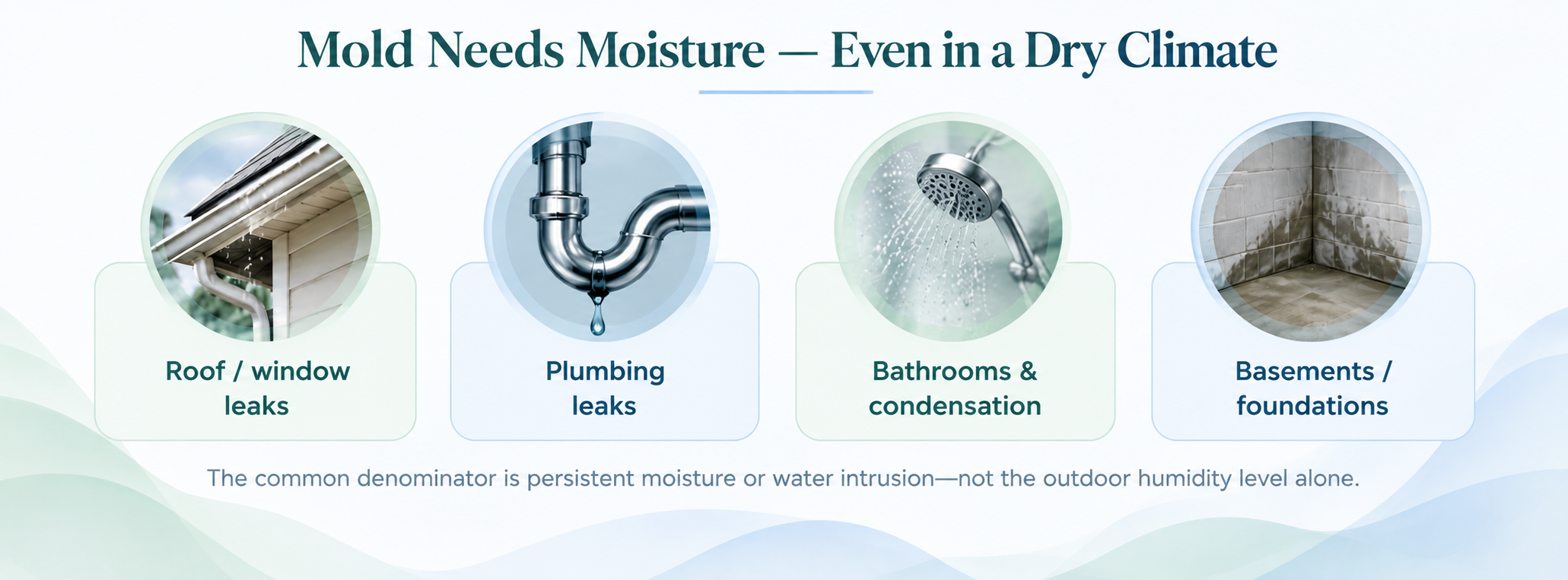
Colorado’s generally dry climate can create a false sense of security. Indoor mold does not require a humid outdoor climate; it requires a persistent source of moisture. Roof or window leaks, plumbing problems, condensation, poorly ventilated bathrooms, wet basements, foundation seepage, flooding, and hidden water damage can all create conditions for growth.[1]
Mold may grow behind drywall, under flooring, around windows, in insulation, or in other places that are not immediately visible. EPA guidance emphasizes that moisture control is the key to mold control and recommends drying water-damaged materials quickly—generally within 24–48 hours—to reduce the chance of mold growth.[1]
What Symptoms Are Clearly Associated With Damp or Moldy Buildings?
Evidence is strongest for respiratory and allergic effects. People exposed to damp or moldy environments may experience nasal congestion or runny nose, sneezing, irritated or watery eyes, cough, wheezing, throat irritation, or skin rash. Damp buildings are also associated with developing or worsening asthma, respiratory infections, allergic rhinitis, and, in susceptible individuals, hypersensitivity pneumonitis.[2][3]
Some patients report broader symptoms such as fatigue, headache, difficulty concentrating, dizziness, or other nonspecific complaints. These symptoms are real and deserve evaluation, but they have many possible causes. Current evidence does not allow a clinician to attribute such symptoms to indoor mycotoxin exposure from symptoms alone.[3]
Is “Black Mold” More Dangerous?
The color of mold does not tell you how dangerous it is. Stachybotrys chartarum is often called “black mold,” but many molds can appear dark, and CDC guidance specifically notes that mold color is not a reliable measure of health risk.[4] Any significant indoor mold growth signals a moisture problem that should be corrected.
Avoid disturbing a large or hidden mold problem without an appropriate cleanup plan. EPA advises considering professional remediation when mold covers more than about 10 square feet, when there has been extensive water damage, when contaminated water is involved, or when HVAC contamination is suspected. People with health concerns should consult a healthcare professional before participating in cleanup.[5]
How Do You Know Whether Mold Is Affecting Your Health?
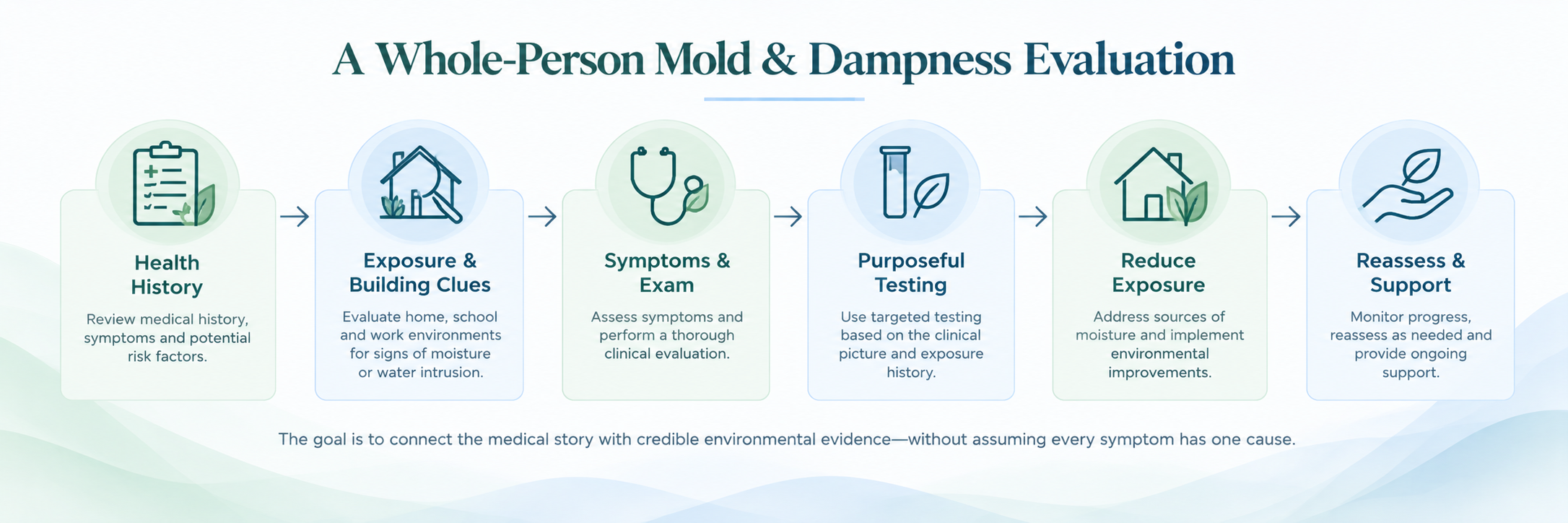
There is no single test that can answer every mold-related health question. Evaluation starts with the medical history: when symptoms began, where the patient spends time, whether symptoms change away from a building, known water damage, allergy or asthma history, occupational exposures, medications, and other medical conditions.
Testing should be selected to answer a specific clinical question. Allergy testing, pulmonary evaluation, or other conventional studies may be appropriate depending on symptoms. Commercial urine or blood mycotoxin testing is controversial; major allergy experts note that these tests have not been established as a routine diagnostic method for determining whether indoor mold is causing a patient’s symptoms.[6] A result should therefore never be interpreted in isolation.
What About Inspecting the Home or Workplace?
If there is visible mold, a persistent musty odor, or known water damage, the priority is finding and correcting the moisture source. EPA does not recommend routine sampling simply to determine whether mold is present when visible growth already exists, because there are no federal health-based standards for acceptable indoor mold levels.[1]
Hidden problems can be harder. A qualified building professional may use moisture meters, thermal imaging, targeted inspection, or other methods to locate water intrusion. Environmental findings should be considered alongside—not substituted for—the patient’s medical evaluation.
What Does Treatment Look Like?
Treatment depends on what is actually found. For mold allergy or asthma, established medical treatments may be appropriate. Fungal infections require specific medical evaluation and treatment, particularly in people who are immunocompromised. If a damp or moldy environment is contributing to symptoms, reducing exposure and correcting the moisture problem are fundamental steps.[1][2]
An integrative plan may also address factors that influence resilience and recovery—sleep, nutrition, hydration, medication and supplement review, gastrointestinal symptoms, stress, activity tolerance, and other coexisting conditions. The purpose is not to assume that every symptom is “mold toxicity,” but to understand the complete patient and address supported contributors in a sensible order.
The Monarch Integrative Health Approach
Patients with complex symptoms often arrive with years of records, multiple diagnoses, extensive testing, and understandable frustration. Monarch’s approach is to slow the story down: review the full history, look for patterns, consider environmental clues, determine which questions deserve testing, and build an individualized plan.
When mold or water damage is a credible part of the history, the medical and environmental pieces should inform one another. Exposure reduction may matter, but so does asking what else could be contributing. That combination—careful listening, appropriate testing, environmental awareness, and reassessment—is especially important when symptoms involve multiple body systems.
A Practical Takeaway
Indoor mold is fundamentally a moisture problem. The health effects with the strongest evidence involve respiratory symptoms, allergies, asthma, and several less-common lung or sinus conditions. Broader chronic symptoms require a more careful differential diagnosis because many conditions can look similar.
If you suspect your home or workplace is contributing to your health concerns, focus on two tracks at the same time: obtain an appropriate medical evaluation and investigate credible signs of moisture or water damage. The goal is not to fear every mold spore—it is to identify meaningful exposure, correct the environment when needed, and understand the patient’s whole health story.
If symptoms persist and you suspect your environment may be playing a role, a comprehensive health history can help determine what deserves further investigation—and what may not.
References & Footnotes
[2] Centers for Disease Control and Prevention and NIOSH. Mold: Health Problems; Mold, Testing, and Remediation. February 25, 2025.
[3] World Health Organization. WHO Guidelines for Indoor Air Quality: Dampness and Mould. 2009.
[5] U.S. Environmental Protection Agency. Mold Cleanup in Your Home. Updated June 4, 2026.

Franca Gardner
ANP-BC, DiHom